Advancing Diabetes Self Management
Gateway Community Health Center, Inc.
 1515 Pappas Street
Laredo, TX 78041
www.gatewaychc.com
Gateway Community Health Center (GCHC) is a federally
qualified health center located on the U.S. Mexico
border in
Laredo, TX, that serves residents of Webb County. More than 95
percent of the county’s residents are Hispanic, and more than
one-third
fall below the federal poverty level. Among patients
served by GCHC, nearly two-thirds
are uninsured and 23 percent
qualify for Medicaid. Approximately 16 percent of the adult patients at GCHC have diabetes.
Patients served by GGHC who have type 2 diabetes were the
target population for the Advancing Diabetes Self Management
project. The project goal was to build an infrastructure and
methodology to assist patients with diabetes in controlling their
blood sugar levels over an extended period of time by
implementing and integrating diabetes self management
programs and services in a culturally sensitive manner.
As a result of ongoing quality improvement efforts, GCHC found
several components to be integral to their diabetes self
management system of care: provider use of self management
principles; an infrastructure that supported patient input yet
provided some choices regarding care; a system of referral,
follow up,
feedback, and documentation that produced integrated
and consistently high quality self management clinical practice; a system that recognized and managed chronic illness related
depression; and a community-based,
culturally-sensitive
approach.
A critical component of GCHC’s comprehensive approach
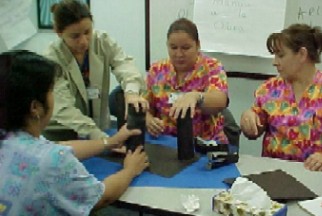
involved the integration of promotoras (community health
workers) into the care of patients with diabetes. Promotora-led interventions included a 10-week
diabetes self management
course tailored for the target audience, a subsequent 10-week
support group that met on a biweekly
basis, and weekly
phone follow up
and support. Knowledge and skills related to
blood glucose monitoring, medication management, physical
activity, healthy eating and healthy coping were taught by
promotoras in the self management course. Goal setting and
problem solving were practiced at each class and during the
support groups that followed. Weekly telephone calls from the
promotoras reinforced problem solving
strategies and helped to keep participants motivated.
The program infrastructure supported and reinforced these
interventions. There were appropriate job descriptions, extensive
competency and skills training, performance monitoring and
supervision for promotoras. Policies and procedures ensured
coordination of patient care, and monthly promotoras provider
conferences included discussion of patient self management
issues. Assessment of patient behavior, collaborative goal
setting, goal follow up, goal revision, and problem solving to
overcome barriers occurred during all patient interactions (physician,
promotora, and certified diabetes educator visits). Finally, the
Patient Electronic Care System was used to collect and manage
self management processes and outcomes.
By incorporating patient feedback and striving for quality, the
Advancing Diabetes Self management program helped GCHC
achieve its mission: “To improve the health status of the people
in Webb County and surrounding areas by providing high quality
medical and dental care, health promotion and disease
prevention services in a professional, personal, and cost
effective manner.”
Summary
Key Interventions
- 10-week
promotora-led
diabetes self management course
that includes depression screening, referral and follow up
promotora-led
support groups
- Standard protocols for promotora follow up
and support,
including weekly phone calls to participants for problem-solving and support
Key Accomplishments
- Integrated promotora-led
self management interventions
into clinic protocols and usual systems of care for people
with chronic conditions
- Developed a culturally-competent diabetes self
management education curriculum that also addresses
cardiovascular disease and depression
- Became certified by the State of Texas Health
Department as a Certified Center for Health Promoters;
developed curricula and increased spread of training
workshops for promotora
Lessons Learned
- A comprehensive system of care and a team approach are
essential for successful program outcomes
- Integrating a self management program into a primary care
system results in high quality diabetes care
- Integrating promotoras into a healthcare delivery system results in more comprehensive services and better
outcomes
Grantee Presentations
Program Materials
Program Publications
|